
When a user enters your website, they expect a simple, clear experience similar to how they would interact in the real world. They want to quickly understand where they are, what you offer and how to move forward. If that doesn’t happen, they are likely to leave the page before discovering your value. A website redesign serves exactly this purpose: updating your site, better organising content and improving everything that affects the user experience. All of this directly influences brand perception and your ability to attract visitors who eventually convert into customers.
When a website becomes outdated or confusing, it doesn’t just create a poor impression. It can also cause you to lose visibility, rankings and the relationship you build with your users.
Below, we show you the key signs that indicate your website needs a redesign.
Signs that indicate you need to redesign your website
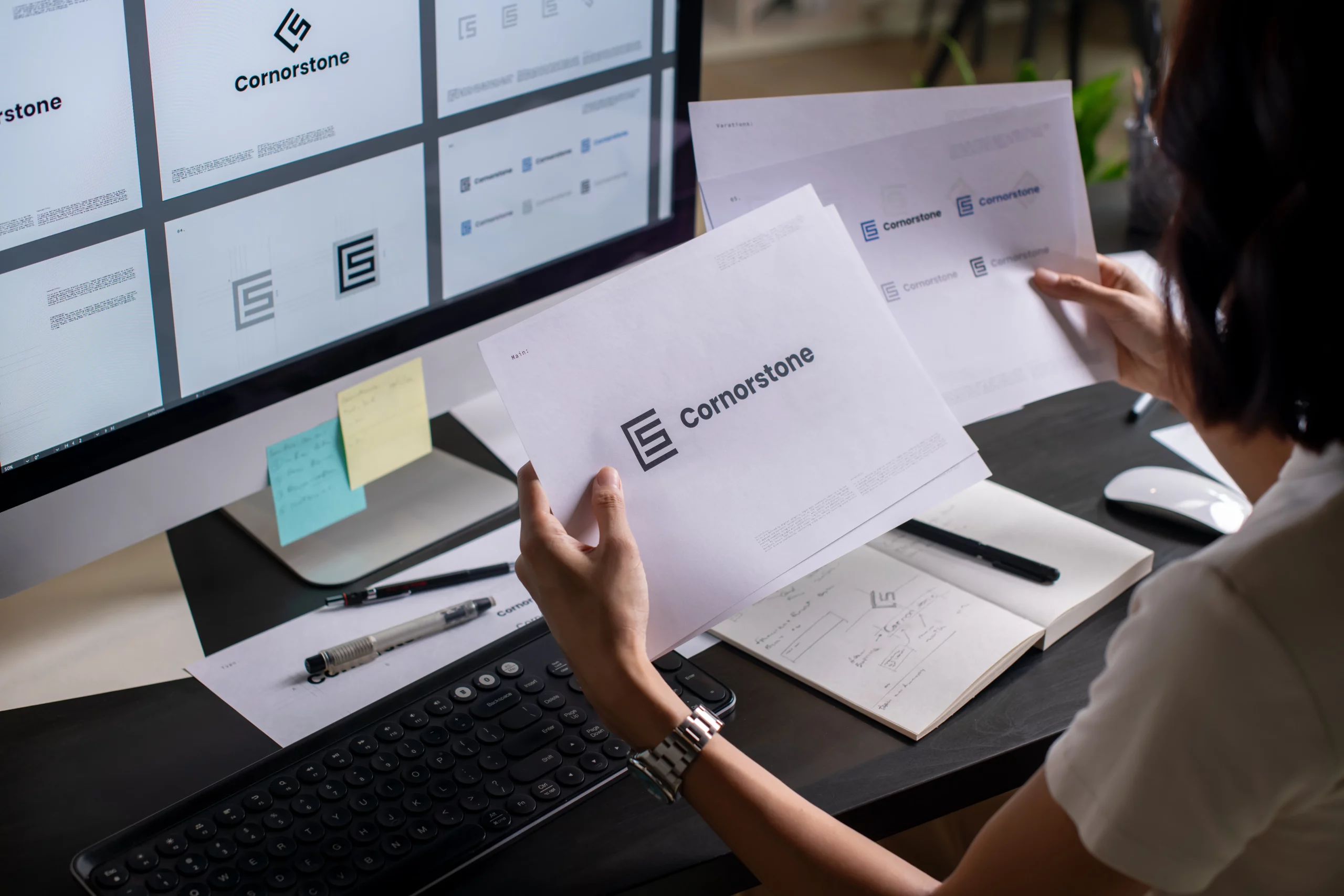
Your image no longer represents your brand
A website should reflect who you are today, not who you were when it was created.
If your business has evolved, your services have changed or your positioning is different, but your website remains anchored in a previous stage, it is a clear sign that it needs updating. Your website design should support your visual identity and reflect your brand’s personality.
Improving user experience (UX)
UX makes the difference between a user staying or leaving
User experience includes everything a person perceives and feels when navigating your website: whether they find what they’re looking for, how easy it is to use and how they feel after visiting. That’s why UX is now one of the key factors in search engine ranking.
When navigation is not intuitive, content is poorly structured or users need several attempts to find what they’re looking for, the experience breaks down.
Current web design trends lean towards minimalism: clean layouts, less visual noise and fewer unnecessary texts.
Less is more — a simple, clear structure usually converts better than an overloaded website.
A good UX includes:
- Logical and natural steps
- Easy-to-find content
- Clear and fast navigation
- Simple forms
If none of this is present, your website will stop being functional for users.
User Interface (UI)
What is user interface (UI)
The user interface is the set of visual elements and interaction patterns that allow users to interact intuitively with your website.
Achieving a good user interface (UI)
To achieve an effective UI, it is essential to take care of aspects such as visual hierarchy, readability, graphic consistency and clarity at interaction points.
A good UI not only makes your website more attractive, but also facilitates navigation and improves the overall user experience.
Responsive web design
Today, most traffic comes from mobile devices. That’s why having a beautiful website on desktop is useless if it doesn’t adapt properly to mobile phones and tablets. Most users discover you on small screens, and if the experience is poor, they will simply leave.
If your website is not fully responsive, it doesn’t just affect user experience — it also harms your search rankings.
Responsive design ensures:
- Optimal display on mobile and tablet
- Fast loading times
- Accessible buttons
- Content adapted to small screens
If these four elements are missing, users leave and Google notices it, causing your website to drop in rankings and be overtaken by competitors.
Consistency with corporate visual identity
Your website design should be a natural extension of your visual identity.
If colours, typography, visual style or tone no longer match your current brand, consistency is lost and your message weakens.
A redesign helps organise and unify visual elements to convey professionalism and consistency.
Addressing real user needs
Design is not decoration.
Your website should prioritise the actions users want or need to take: contacting you, buying, booking, learning or downloading.
If visual resources overshadow these actions or users don’t understand what to do next, design stops being useful.
A redesign allows you to rethink which content is relevant, where to place it and how to guide users.
Page load time and performance
A slow website makes navigation difficult, increases bounce rates and harms rankings. If pages are heavy, scripts are excessive or images are poorly optimised, a redesign is often the most efficient solution. Users don’t wait — and a slow website is a missed opportunity.
Today, tools such as Google PageSpeed Insights allow you to analyse your website’s real performance, image weight, response times, code issues or lack of mobile optimisation.
If your metrics are in the red, it’s a clear sign your website needs a thorough review.
Common mistakes that indicate you should redesign your website
Many websites are designed based on internal company preferences rather than user needs.
This often results in overloaded, confusing or poorly structured pages.
Common mistakes include:
- Adding content that adds no value
- Using low-quality images
- Having pages that generate no value
- Mixing visual elements without a clear direction
- Large blocks of text with no hierarchy or breathing space
A good redesign helps clean all this up, keep only what matters and highlight what you truly want users to see.
Redesign your website professionally with V3rtice
At V3rtice, we believe a website should work for your brand, not just look good. That’s why we focus both on design and on how users navigate and understand your value proposition.
Our graphic design team creates modern, functional websites aligned with your communication strategy. In recent months, we’ve worked on projects such as the rebranding and web design of DELAFUENTE Art, where we created a complete visual identity and art direction to translate its artistic universe into the digital space. Another project involved the full update of Deplan’s corporate image, applying its new identity to a modern, sustainable, customer-oriented website.
For a redesign to work, we first need clarity on key points: brand objectives, user needs, corporate strategy, the tone and visual identity to project, and the positioning you want to achieve.
With all this information, we can build a coherent website, visually refined and, most importantly, focused on delivering real results.